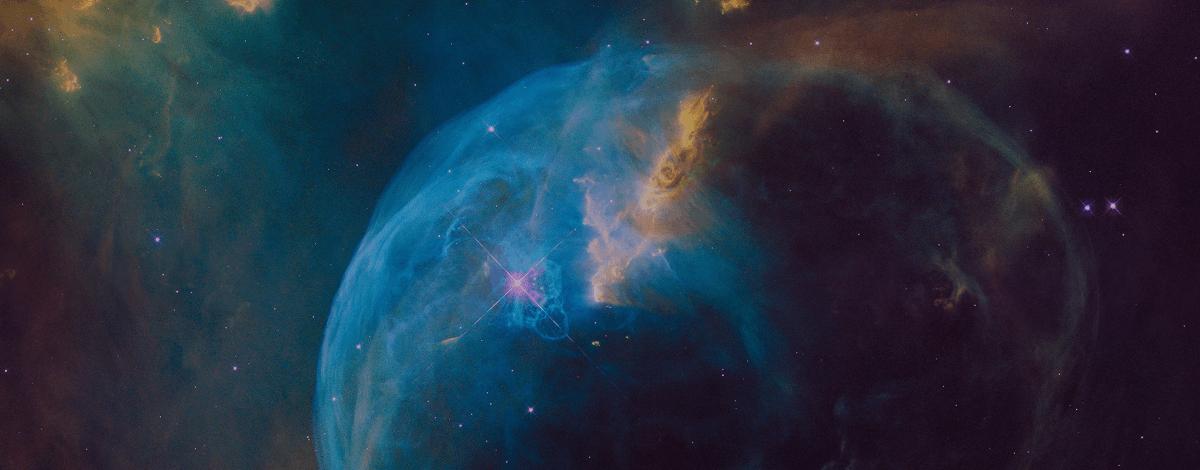
This site is dedicated to an average person (Me) with my many interests, one of which is finding the vastness of space and the cosmos more than intriguing, but amazing and ore inspiring, also the incomprehensible vastness of what lay out there in our solar system and beyond.
I have always been intrigued by the stars, the planets and the possibilities of what else could exist in systems like ours. With the sheer number of galaxy’s and solar systems, suns and planet’s, it’s obvious to me that there must be something, some other form of life other than what is here on Earth, out there, somewhere.
It’s a question that will probably never be answered in my life time, but I can make the most of what is above us with the use of a Telescope and a camera.
Join me in my journey into star gazing and astrophotography.
Ill be using this site to catalogue my picture taking progress along with some comments about my experience with the whole process. The site will be ever changing and ill update it as and when I can.
Please bear in mind I am a 100% beginner with a telescope and a half decent camera, ill be learning how to use both as I go so please don’t take any information you read here as gospel or even particularly right.
My Telescopes:
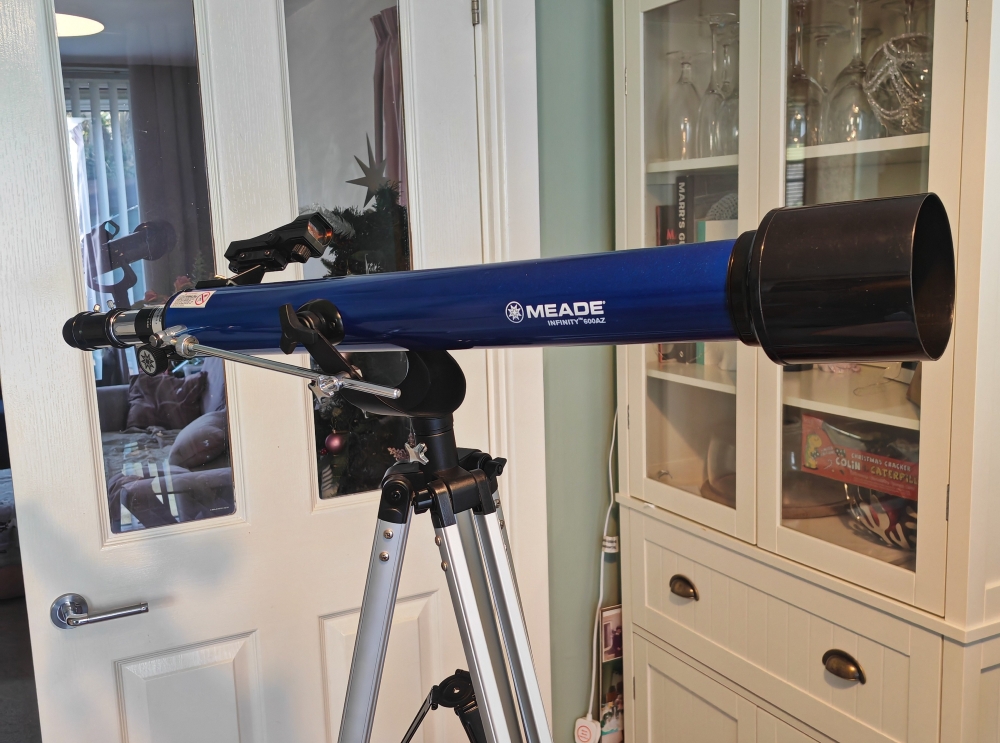
Some years ago my wife bought me a lovely 60mm Meade infinity 600AZ refractor telescope, I had no idea what I was doing with it, I aimed it at the moon a few times but that was bout it, however this was the catalyst for the interest in seeing the stars, planets and nebular more closely that I have now.
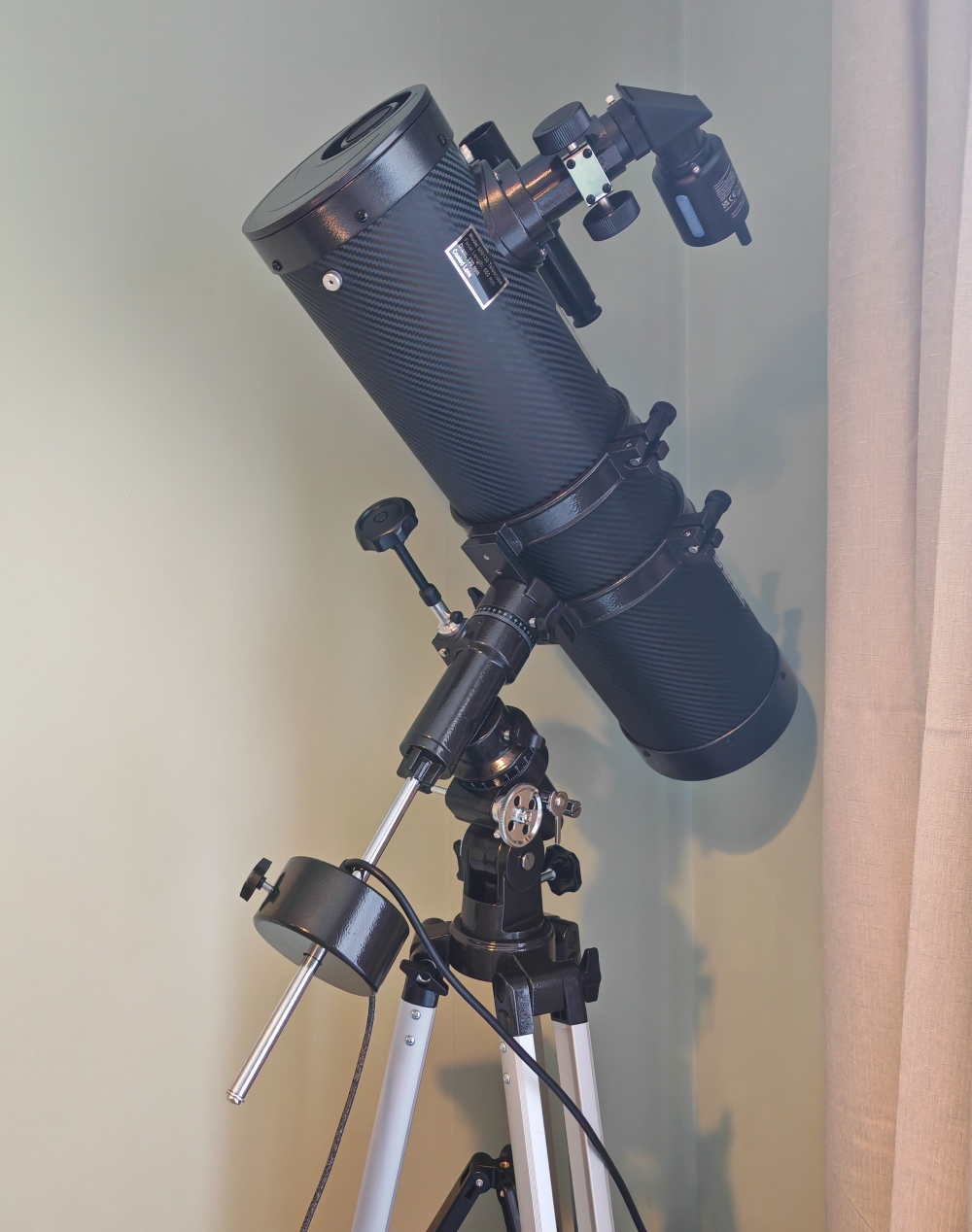
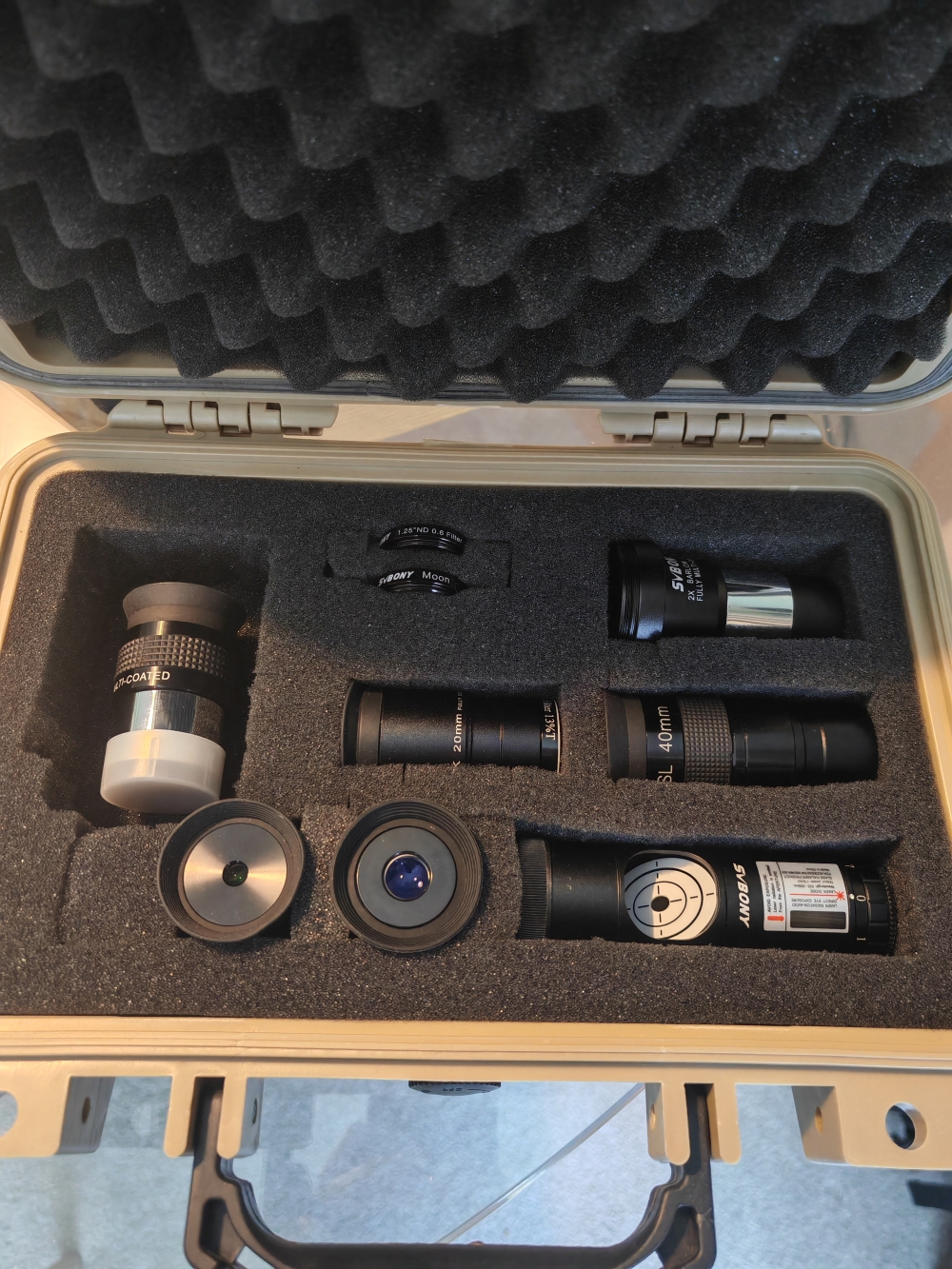
Recently I bought a Solomark 130EQ Newtonian Scope, the main obvious difference being the physical size of the tube, this means more light can be gathered by the scope. Its also on an Equatorial mount on the tripod with a counter wight, iv invested in a few eye piece's of varying length and a Cheshire collimator for mirror alignment.
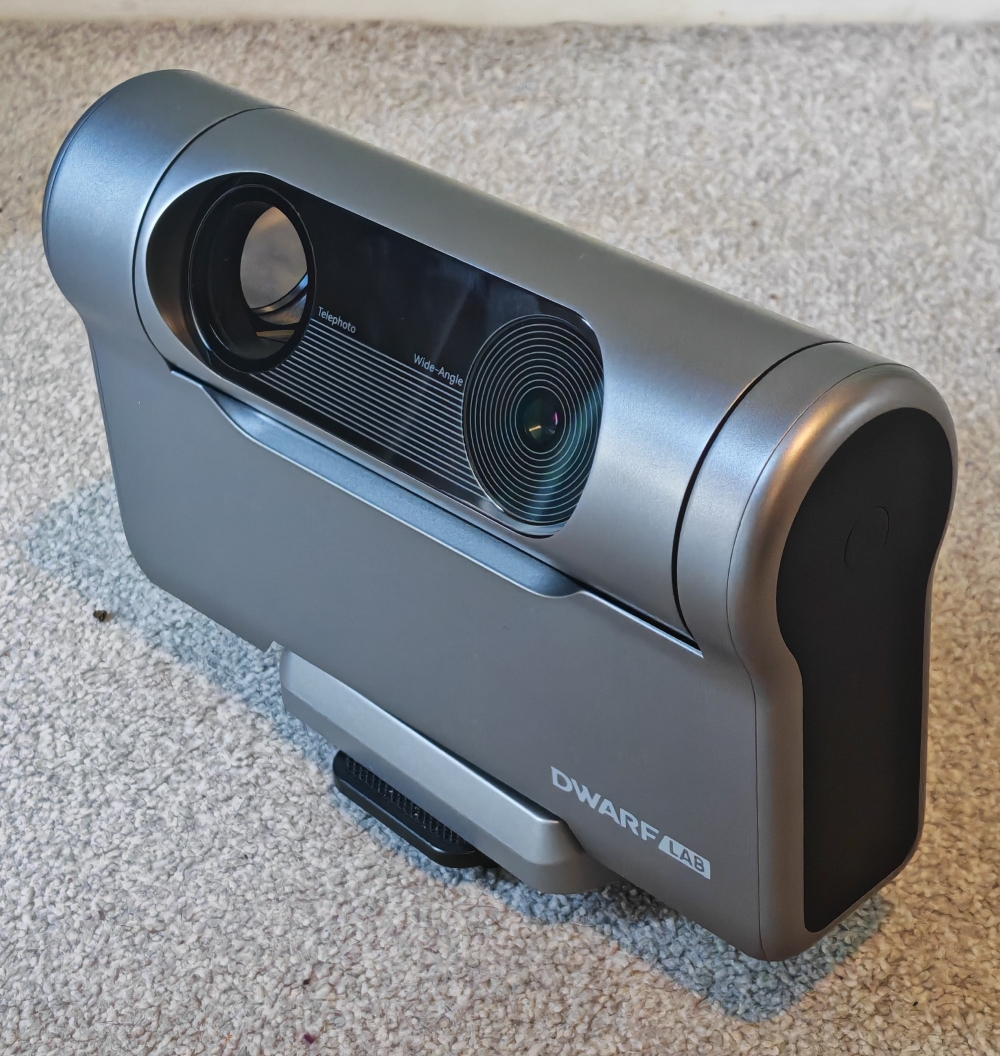
I also recently bought a Dwarf 3 Smart Scope, this is basically a digital camera with a built in telescope and a standard wide angle lens, this makes it very versatile and surprisingly easy to use. The Dwarf 3 also has some built in filters that can be used for remarkable imagery of nebular and the sun!
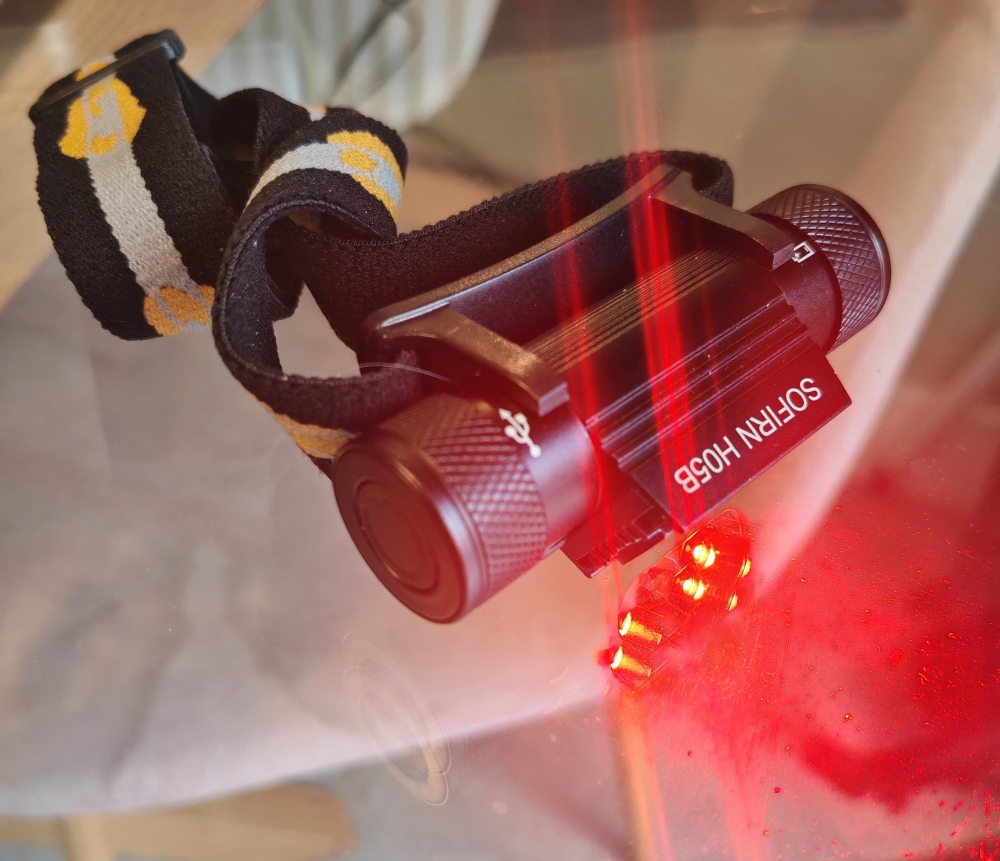
Another essential investment is a Red head torch, this is needed for seeing what im doing in the dark, Red is the best colour so that it wont effect your eyes and they will stay adjusted to the dark.
Most of my (lets call it Sky Work) is done in my modestly sized back garden in a small village in Northamptonshire England, however I do plan to take the Dwarf 3 to other locations. Here (at Home) I have lesser light pollution than in a town or city known as a "Bortle 4" area, apart from the warship search light a neighbor seems to have bolted to the wall of his house and pointing straight at my garden and that illuminates everything all the way to the next village! But between the times that the neighbor's dog goes plane spotting at night, and the weather being good enough I get a reasonable view of the sky. Keep an eye on the POST's page for updates and progress.
Orbital Explorer